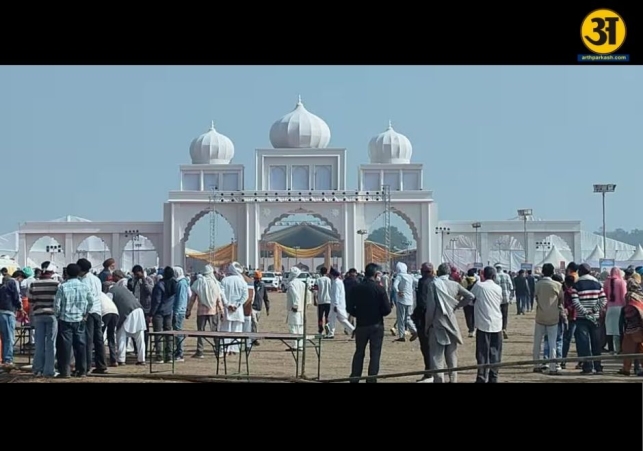
Pilgrims gather in Jyotisar for state event on martyrdom day
State-level observance in Jyotisar attracts large crowds marking Guru’s martyrdom anniversary
Jyotisar, a sacred town located about 15 km from Kurukshetra, holds great historical and spiritual importance for millions of people. It is believed to be the very place where Shri Krishna delivered the Bhagavad Gita to Arjuna before the Mahabharat war more than 5,000 years ago. For centuries, it has been a peaceful pilgrimage centre for Hindus. But on Tuesday, the town witnessed a much larger gathering than usual as it hosted a major state-level event marking the 350th martyrdom anniversary of the ninth Sikh Guru, Guru Tegh Bahadur.
Prime Minister Narendra Modi attended the programme, making the event even more significant for the thousands of pilgrims who came from across Haryana, Punjab, and Delhi. The celebrations were jointly organised by the Haryana government and the Haryana Sikh Gurdwara Management Committee (HSGMC). The arrangements were planned on a huge scale to welcome the sangat (followers) and to honour the teachings and sacrifice of Guru Tegh Bahadur.
A massive pandal spread across 170 acres was set up for the occasion. Different zones were created for private vehicles and buses to manage the large crowd efficiently. Roads leading to the venue saw a steady flow of devotees from early morning. Many had travelled long distances to be part of the historic gathering and to listen to the messages shared during the commemoration.
The entrance gate to the venue was specially designed to resemble the domes of a gurdwara, symbolising Sikh architectural style and offering a warm welcome to visitors. Two large community kitchens, set up by Sikh volunteers and philanthropists, served food to the estimated one lakh people attending the event. These langars reflected the Sikh principle of seva (selfless service), allowing everyone to eat together regardless of background.
Pilgrims honour Guru Tegh Bahadur’s legacy
The celebrations saw strong participation from devotees who had started arriving a day before the main event. Four nagar kirtans—religious processions—from Sirsa, Panchkula, Yamunanagar and Faridabad reached Jyotisar on Monday. These processions, marked by singing of hymns and display of religious spirit, added to the devotional atmosphere in the town.
Around 350 children performed shabad kirtan, reciting Guru Ki Vaani with devotion and discipline. Their performances were appreciated by the audience, as they symbolised the passing of spiritual teachings to the younger generation. A sand art show was also organised, depicting events from the life and sacrifice of Guru Tegh Bahadur and showcasing artistic talent connected to Sikh heritage.
ALSO READ: Dharmendra’s political journey reveals his surprising wish for absolute control
ALSO READ: When heart trouble hides: Why major artery blockages often show no symptoms
Since November 1, the Haryana government and community groups have been organising various programmes across the state to spread the teachings of Guru Tegh Bahadur. His values of courage, religious freedom, and protection of human rights continue to inspire people centuries after his martyrdom.
Many devotees shared their feelings about the event. Parminder Kaur, a 65-year-old woman from Singhpura village in Kurukshetra district, said she felt blessed to witness such a grand celebration happening close to her home. She added that many pilgrims coming for the programme would also attend the ongoing International Gita Mahotsav, which is happening nearby.
Another participant, Tara Singh, who is a member of Phaggu village panchayat in Sirsa, said the government had made every possible effort to pay respect to Guru Tegh Bahadur’s sacrifice. He felt that the arrangements, the scale of the event, and the participation from across the state reflected collective respect for the Guru’s teachings.
Children, too, were enthusiastic about being part of the gathering. Harman Singh, a 12-year-old boy from Fatehabad district, said he had read about Guru Tegh Bahadur in his Class 6 textbooks. He said he admired the Guru’s bravery and his willingness to protect religious freedom for all. Calling him “Hind Di Chadar,” he highlighted how the Guru is remembered as a shield for humanity and a defender of the oppressed.
For many visitors, the event offered a chance to connect with spiritual heritage, understand Guru Tegh Bahadur’s teachings more deeply, and experience community unity. The gathering brought together people from different backgrounds, all united in respect for the Guru’s life and message.
As the day progressed, Jyotisar transformed from a quiet pilgrimage site into a vibrant centre of devotion, culture, and remembrance. For many devotees, it was a once-in-a-lifetime experience to attend such a significant commemoration at a location already deeply rooted in Indian spiritual history.
Related News